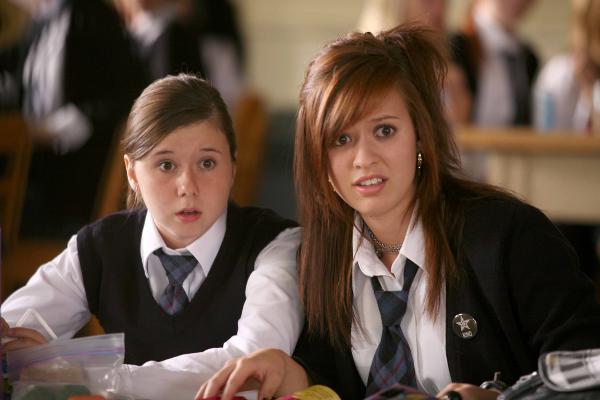
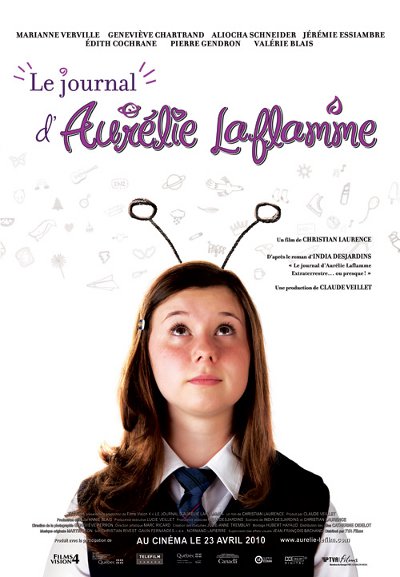
Journal d’Aurélie Laflamme, Le – Film de Christian Laurence

Le Journal d’Aurélie Laflamme est une comédie pour adolescents dont le personnage principal est tiré de la populaire série de livres écrits par l’auteure India Desjardins.

Le journal d’Aurélie Laflamme de Christian Laurence

Le journal d’Aurélie Laflamme de Christian Laurence

Le Journal d’Aurélie Laflamme est une comédie pour adolescents dont le personnage principal est tiré de la populaire série de livres écrits par l’auteure India Desjardins. Ce film est basé sur le premier tome de la série « Aurélie Laflamme, Extraterrestre ou presque ». Le réalisateur Christian Laurence vient du domaine de la télévision et signe ici son premier long-métrage de cinéma.

Comme on pouvait s’en douter d’après les succès obtenus par les livres, Le Journal d’Aurélie Laflamme fut reçu chaleureusement par le jeune public québécois qui en fit l’un des succès au box office de 2010. Au niveau international, le film de Christian Laurence eut droit à quelques sélections dans les festivals francophones, sans toutefois se démarquer outre mesure.

Un second film tiré des aventures d’Aurélie Laflamme a été produit par la suite.

Résumé

Aurélie est une adolescente de 14 ans, un peu perdue et donc en quête de solutions. Entre les habitudes de sa mère sédentaire et les chicanes avec sa meilleure amie, elle rêve à son premier french kiss ! Mais au fond, Aurélie se sent bien seule dans l'’univers, surtout depuis la mort de son père, il ya 5 ans.

Et si son père était simplement un extraterrestre, ayant quitté la Terre pour rejoindre sa planète? Génétique oblige, Aurélie serait elle-même une extraterrestre! Ceci expliquerait bien des choses. Par exemple, pourquoi elle se sent si différente des autres (surtout de sa mère), pourquoi elle n'’est pas capable d’'enligner deux mots sans faire une gaffe, et surtout pourquoi les garçons lui tapent vraiment sur les nerfs.

Synopsis officiel

Distribution

Marianne Verville (Aurélie Laflamme) ; Geneviève Chartrand (Kat) ; Aliocha Schneider (Nicolas) ; Jérémie Essiambre (Truch) ; Edith Cochrane (mère d’Aurélie) ; Pierre Gendron (Denis Beaulieu) ; Valérie Blais (Marie-Claude) ; Sylvie Potvin (Soeur Rose)

Fiche technique

Genre: Comédie dramatique - Origine: Québec, 2009 - Sortie en salles: 23 avril 2010 dans 83 salles au Québec - Durée: 1h48 - Classement: Général - Tournage: septembre-octobre 2009 - Budget approximatif: 4,1 M$

Réalisation : Christian Laurence - Scénario : Christian Laurence et India Desjardins, d'après le roman éponyme d'India Desjardins - Production : Claude Veillet et Lucie Veillet - Société de production : Films Vision 4 - Distribution : TVA Films

Équipe technique - Costumes : Julie-Anne Tremblay - Direction artistique : Marc Ricard - Montage : Hubert Hayaud - Musique : Martin Léon - Photographie : Geneviève Perron
Emerging in the late 1990s and early 2000s, Arias initially captured public attention under her iconic pop-culture persona, "Licenciada Tetarelli." Over the subsequent decades, she successfully transformed her career by formalizing her acting credentials and establishing a multi-faceted digital footprint. Today, her footprint stretches across traditional television, premium dramas, electronic music, and alternative digital subscriptions. The Cultural Origins: "Licenciada Tetarelli"

Noelia Arias: Entertainment Content and Popular Media The landscape of Latin American entertainment has undergone massive shifts over the last three decades, moving from highly provocative late-night broadcast television to digitized, multi-platform brand ownership. Few figures encapsulate this cultural evolution in Chile quite like . Popularly known by her early career persona " Licenciada Tettarelli ," Arias transitioned from a late-night television bombshell into a respected professional actress, an electronic music DJ, and an independent content creator. Her career offers a fascinating case study in how modern public figures navigate mainstream media, overcome early industry pigeonholing, and adapt to contemporary digital landscapes. 1. The Genesis: Broadening Broadcast TV Thresholds

Her early content—a mix of lifestyle vlogs, reaction videos, and short comedic sketches—demonstrated an innate understanding of algorithmic psychology. But where many creators stopped at virality, Arias pushed toward narrative depth. By 2020, her content had evolved into mini-documentaries and scripted series that addressed themes of identity, ambition, and digital-age anxiety.

A dark-comedy drama following a group of unemployed men turning to a life of crime. (2013) Telenovela / Canal 13

Moving beyond passive viewing, Arias hosts weekly interactive events where audiences vote on plot twists, character decisions, and even set designs. This co-creation model has turned her fanbase into active stakeholders.

Arias herself has reflected fondly on this period, noting her enjoyment of working with the team and the fun nature of the production, as reported by LUN in early 2024. Versatility in Media: Roles Beyond Infieles

In recent years, Noelia Arias has taken a bold step into the world of adult content creation. As traditional television opportunities dwindled, she, like many modern artists, found new avenues for expression and revenue online. In 2019, she began exploring the adult film industry, candidly admitting to the press that it was a smart business decision. She has been active on platforms like and the Chilean platform Unlok , where she sells exclusive, sensual content to her subscribers. In 2023, it was reported that her Unlok subscription was priced at 10,000 Chilean pesos per month.

As Arias continues to grow and evolve as a content creator, she has several exciting projects in the works. These include [list upcoming projects, such as new web series, collaborations, or live events]. Her goals include [list goals, such as expanding her audience, exploring new formats, or collaborating with other industry professionals].

The character was a masterclass in satire and overt sensuality, blending sharp comedic timing with a hyper-feminine aesthetic. "Licenciada Tetarelli" quickly became a household name, transforming Arias into a nationwide sex symbol and a fixture of early-2000s tabloid and entertainment media. This era established her unique footprint in popular culture as an entertainer who could seamlessly command the attention of mass television audiences. Transitioning to Scripted Television and Drama

: Using the title "Licenciada" (a university graduate) in a sexualized context played with Chilean social hierarchies.

If you are researching specific eras of her career, let me know if you would like to explore her , her electronic music tour history , or an analysis of early 2000s Chilean late-night TV culture . Share public link

: Arias secured a recurring role as Estrella, appearing in 34 episodes of this highly rated crime-drama series. The role allowed her to display sustained dramatic depth in a mainstream primetime slot.